Introduction: The Dilemma of Choosing Between SMB and SMA
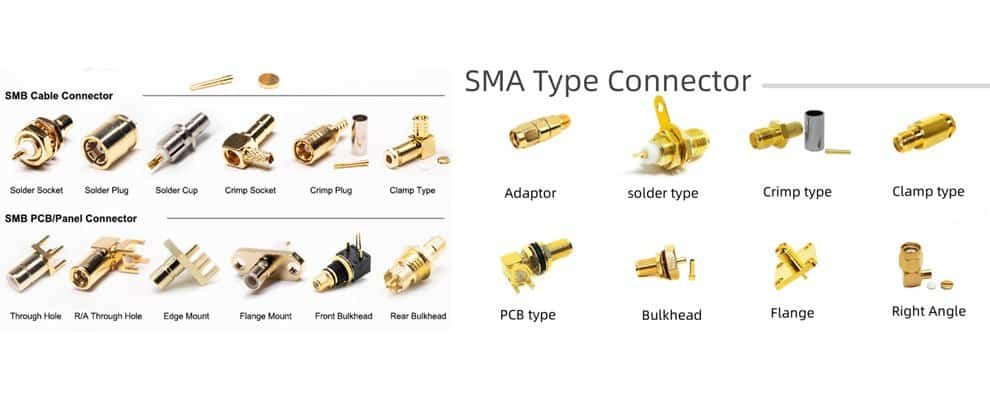
When designing or upgrading coaxial cable systems, engineers and procurement managers often have a key question. They want to know which connector is better: sma vs smb connector? Both SMB (SubMiniature Version B) and SMA (SubMiniature Version A) connectors are common in RF and high-frequency uses. However, their design, performance, and cost differences can affect project success.
The debate around SMB vs SMA connector hinges on factors like frequency range, durability, and installation efficiency. For example, SMB jack connectors are popular in small devices because they snap on easily. In contrast, SMA connectors have a threaded design that provides strong stability. This article provides a data-driven comparison to guide B2B decision-makers.
SMA connectors :
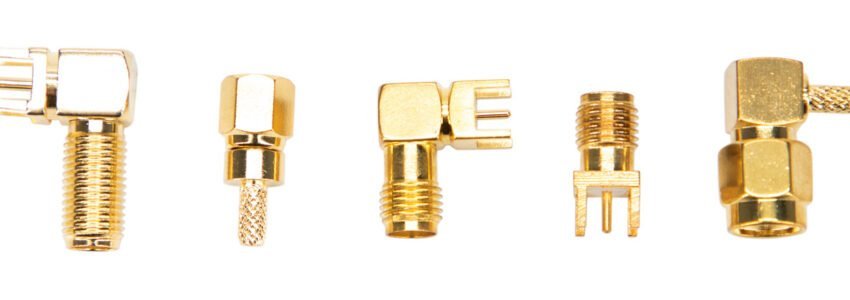
Evaluating frequency specifications is essential when selecting SMA connectors types. Renowned for superior signal integrity, these components excel in high-frequency applications up to 18 GHz and beyond within SMA electronics and power systems. ZOMWAVE SMA connectors types provide precision engineering with enhanced environmental sealing, effectively solving connectivity challenges in extreme temperatures and corrosive environments. Their robust construction ensures stable performance in industrial automation, medical equipment, and military communications,where vibration resistance and long-term reliability are critical. This durability significantly reduces system downtime and replacement costs while maintaining consistent signal transmission quality.
On the other hand, SMB connectors generally operate effectively up to about 4 GHz. While this range is sufficient for many applications, it may not meet the needs of more demanding RF environments.Durability is another critical factor. Engineers build SMA connectors strong to handle tough conditions. This makes them good for outdoor and industrial use.
SMB connectors :
For engineers and procurement teams evaluating “smb connector male female”,”smb male connector” note that a threaded coupling mechanism delivers a robust mechanical connection that resists loosening and helps prevent accidental disconnections from vibration or movement. This makes threaded designs attractive where retention and environmental resilience are priorities.
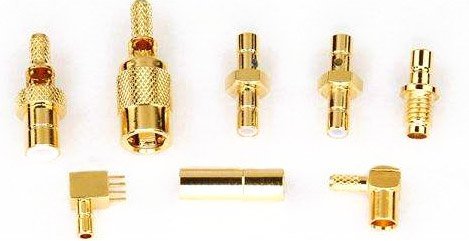
The smb cable connector offers rapid connect and disconnect with a compact footprint optimized for small form factor devices. Its snap on design streamlines assembly and is ideal for applications where installation speed and space savings are critical. In high vibration or extreme environment scenarios the snap on mechanism may be less reliable, so reinforced variants are available to provide the stability and lifecycle performance required for demanding deployments.
Installation efficiency is a key factor when scaling production. SMB cable connector and SMB RF connector are favored for quick push-on coupling installation, which reduces labor time and assembly cost in mass production. These connectors excel in applications requiring frequent mating cycles while maintaining solid RF performance. ZOMWAVE’s SMB cable connector and SMB RF connector solutions feature excellent vibration resistance and consistent impedance matching, effectively solving signal integrity challenges in compact spaces. Our engineered approach helps customers balance speed, space and durability requirements with custom configurations and volume production capacity, all manufactured to international quality standards for reliable performance across telecommunications and industrial applications.
Analyzing Key Differences: Design and Performance
1. Mechanical Design and Durability
SMB female connector delivers quick-lock snap-on coupling for rapid installations where frequent disconnection cycles are required. While SMA connectors offer superior vibration resistance via threaded coupling for harsh industrial or aerospace environments, our SMB female variant prioritizes operational efficiency without compromising reliable 50Ω termination. Engineered for applications valuing speed over extreme mechanical stability.
2. Frequency and Power Handling
SMA supports frequencies up to 18 GHz, ideal for high-precision scenarios like 5G base stations or radar systems. SMB, rated for 4 GHz, suits cost-sensitive projects such as automotive sensors or IoT devices. SMA’s brass construction also handles higher power levels (500W peak) versus SMB’s 250W capacity.
Application Scenarios: Matching Connectors to Needs
Budget limitations exist for medium-frequency projects
Conclusion: Strategic Selection for Optimal Results
Selecting the appropriate interconnect solution, including smb connector types and sma jack, depends on precise application requirements. The SMB bulkhead connector provides secure panel mounting with superior grounding, and the SMB coax connector ensures reliable cable assembly integration. sma jack supports high-frequency performance up to 18 GHz with exceptional durability, while SMB offers compact, snap-on convenience for operations up to 4 GHz. Critical factors involve frequency needs, environmental sealing, and mating cycle durability. ZOMWAVE’s engineered solutions deliver precision impedance matching and phase stability, effectively resolving signal reflection, mechanical stability, and insertion loss issues in demanding conditions. Furthermore, ZOMWAVE addresses electromagnetic interference, vibration resistance, and wide-temperature operation through advanced designs, enhancing signal integrity and longevity. Benefits encompass simplified inventory management, reduced system downtime, scalable supply chain support, and access to customized configurations – ultimately optimizing total cost of ownership for telecommunications, testing, and industrial applications where dependable interconnections are essential.
FAQ
1.What is the difference between SMA and SMB connectors?
SMA connectors with threaded couplings are suited to higher frequencies, while SMB snap-on SMA connectors work best for compact, vibration-prone applications.
2.Can SMA connect to 3.5 mm?
Yes, SMA can connect to 3.5 mm interfaces using precision adapters while maintaining impedance matching for test applications up to 26.5 GHz.
3.ls 2.4 mm the same as SMA?
No, 2.4 mm interfaces differ from SMA connectors in both frequency range and mechanical coupling compatibility.
4.What is an SMB connector?
An SMB connector is a coaxial RF connector with snap-on coupling, with a frequency range typically up to 4 GHz for various communication applications.
5.What is the difference between SMA and SMC connectors?
SMA features threaded coupling for higher frequencies, while SMC uses smaller threads. The smb connector frequency range falls between them, typically reaching 4 GHz.
6.What is the difference between SMB and SMC?
SMB connectors use a snap-on coupling with a frequency range of 4 GHz, while SMC connectors feature threaded coupling for vibration-resistant applications.
7.What is the difference between SMB jack and plug?
An smb jack is the female socket, and the plug is the male pin connector in coaxial cable setups.
8.What are the disadvantages of RJ45 couplers?
Disadvantages of RJ45 couplers include signal loss, increased vulnerability to damage, and added cable strain compared to a single, continuous cable.

 Coaxial Cable Assembly
 Microwave Test Cable
 Coaxial RF Connector
 Coaxial RF Adapter
 Coaxial RF Termination
 Coaxial RF Test Probe
 Coaxial RF Attenuator
 RF Switches
 Coaxial RF Power Dividers